


Welcome to another edition of Willoughby Hills!
This newsletter explores topics like history, culture, work, urbanism, transportation, travel, agriculture, self-sufficiency, and more.
I recently started reading the excellent but terrifying book The Uninhabitable Earth by David Wallace-Wells. In it, he shares a realistic look at how climate change will reshape our cities, our agriculture, our health, and our lives in the coming decades.
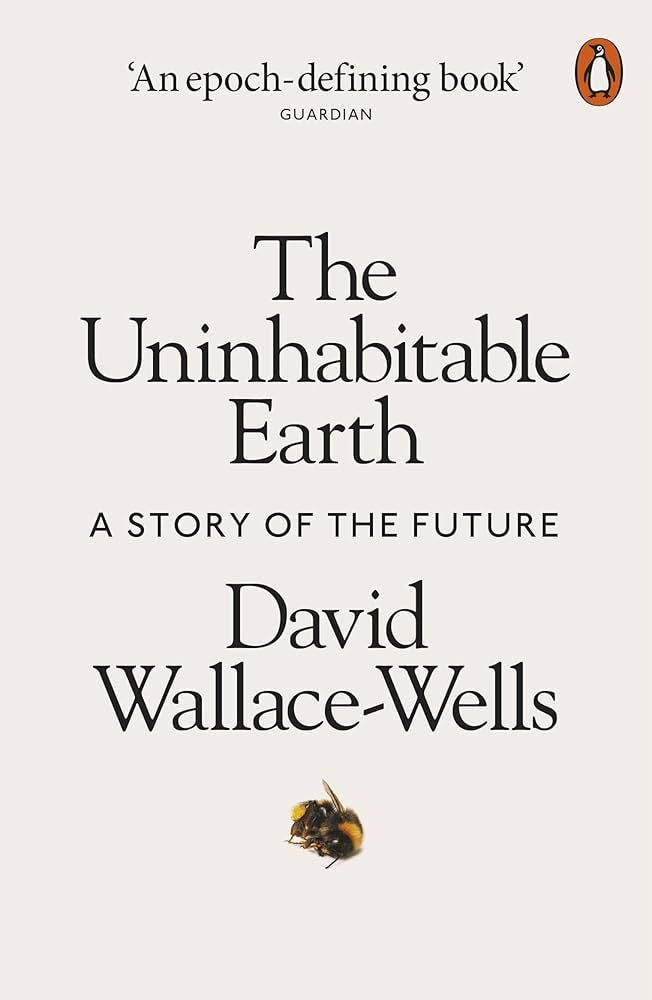
Perhaps most startlingly, Wallace-Wells describes that the acceleration of emissions that produce global warming is a relatively recent trend (emphasis added):
“Many perceive global warming as a sort of moral and economic debt, accumulated since the beginning of the Industrial Revolution and now come due after several centuries. In fact, more than half of the carbon exhaled into the atmosphere by the burning of fossil fuels has been emitted in just the past three decades. Which means we have done as much damage to the fate of the planet and its ability to sustain human life and civilization since Al Gore published his first book on climate than in all the centuries- all the millennia— that came before…
The majority of the burning has come since the premiere of Seinfeld. Since the end of World War II, the figure is about 85 percent. The story of the industrial world’s kamikaze mission is the story of a single lifetime- the planet brought from seeming stability to the brink of catastrophe in the years between a baptism or bar mitzvah and a funeral.”
As I think back on the patterns of my own lifetime, I can recognize subtle changes to the weather and climate. The summers start sooner now and they are hotter and more humid. The winters seem harsher, with big blizzards threatening us in the Northeast, or they’re mild with almost no snow. There was a Christmas party maybe a decade ago where we gathered around our outdoor fire pit in short sleeves because the high temperatures were around 70ºF!
There are myriad ways to track how our climate has changed over the last few decades, from measuring the carbon in the atmosphere to monitoring sea level rise. But there’s another index that probably isn’t on most people’s radar. I’m calling it the This Old House Index.
This is also a personal and anecdotal means of tracking for me. As many of you know, I spent 15 years working for the popular public television series This Old House and Ask This Old House.
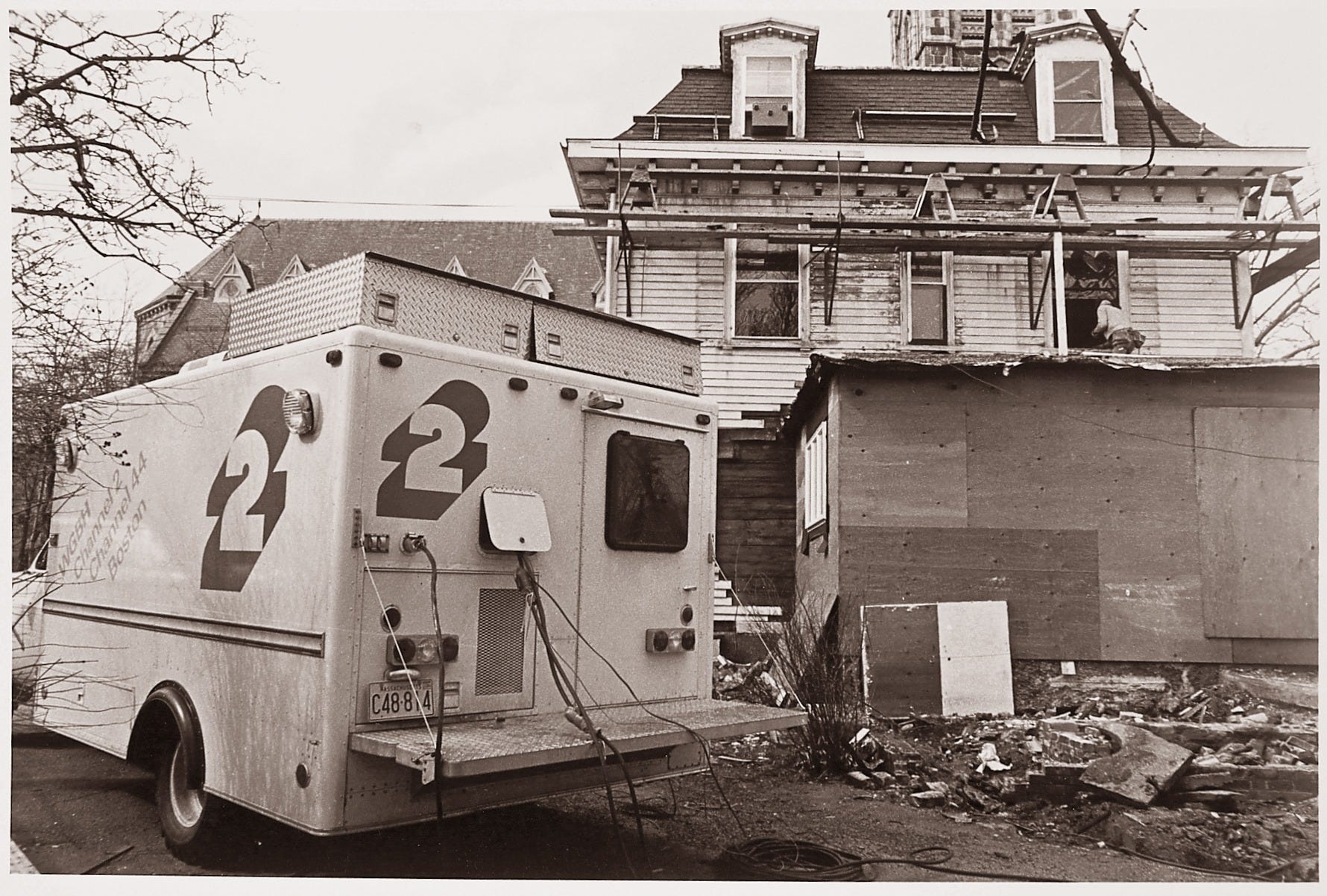
The first episode of This Old House premiered in 1979, one year after the first Home Depot store had opened in Atlanta, and five years before I was even born. Bob Vila, the host at the time, led a group of contractors through a 13 part renovation of an old Victorian home that had fallen into disrepair in Boston’s Dorchester neighborhood.
Then, like now, many young families could not afford a brand new house and were forced into repairing and renovating older houses, often in neighborhoods closer to the city that were also crumbling. The houses could be purchased at a low price, but high repair costs forced many of these owners to roll up their sleeves and tackle the work themselves. Against this backdrop, it makes sense that This Old House and The Home Depot both launched within a few months of each other.
For years, This Old House followed a predictable format: find an old house in need of some repair, follow along for the renovation across several serialized episodes of television, and then show the beautifully designed finished product. Initially, all of the homes featured were in and around Boston, but over time, the show began to expand, showcasing houses all around the country (and once in London!).
Even with expanded geography though, the formula remained the same. The story was largely about what happened within the four walls of a home, or within the bounds of an owner’s property lines. Sometimes greater context would be told by showcasing homes of a similar era or architectural style or visiting nearby cultural institutions to get a sense for local color. But there was never any notion in those early years that a single house had anything to contribute to a conversation around environmentalism or was influenced in any way by larger forces like extreme weather events. A house was an owner’s castle, their own little fiefdom, to do with it as that owner pleased.
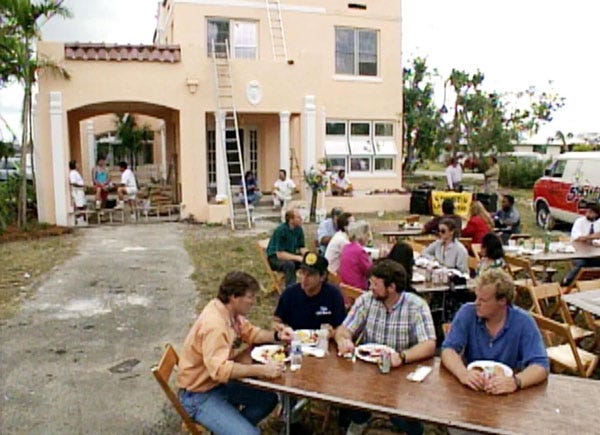
It took until the show’s 14th season in 1992 to begin to showcase the damage that a natural disaster could do to a home. That year, the crew traveled to Miami, which had been ravaged by Hurricane Andrew, to track the rebuilding process of a single home. I was a second grader, so was not on site for those shows.
Back then, Hurricane Andrew was an anomaly. It was the costliest and most damaging storm to ever make landfall in the United States. It made sense for This Old House to cover the storm’s aftermath as it was all over the headlines and in our collective consciousness. The narrative seemed to be rebuild from this once in a lifetime event, then move forward. It seemed unlikely that another large storm of this magnitude would make landfall. It was an aberration, not a pattern. Or so we thought.
It would take until Season 29 in 2008 before another disaster would take center stage at This Old House. This time, it was Hurricane Katrina, which had struck New Orleans in the summer of 2005. Hurricane Katrina took the record from Hurricane Andrew, becoming the costliest hurricane to hit the U.S. at that point, causing $108 billion in damage in 2005 money, plus taking the lives of 1,833 people.
I was on the crew at that point and I remember the decision to go to New Orleans was not an easy one. For one thing, by the time we first arrived on the ground in Louisiana to begin filming, it had been two years since Katrina made landfall. On the one hand, it seemed like a dated story, one that had faded from the zeitgeist.
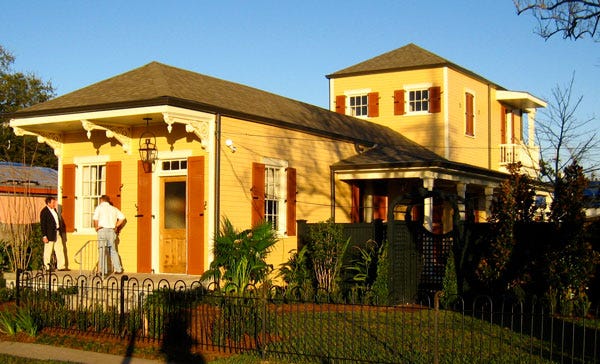
On the other hand, it was clear that even two years later, the city was far from rebuilding. The tourist areas around the French Quarter had reopened, but the residential areas, especially the Upper and Lower Ninth Wards, were still in disarray. Some people were camping in FEMA trailers in their front yards, while others had abandoned their houses entirely and tried to make a new life in Houston, Galveston, or Baton Rouge.
In the end, it felt like the right decision to shine a spotlight on the tremendous need to rebuild in New Orleans, especially because that effort was taking so long and it had faded from the headlines. I remember taking away the lesson that a hurricane happens in a matter of days, but its path of destruction can stretch for years beyond.
It took the show 13 years from premiering on PBS before the Hurricane Andrew series. It was then another 16 years before the Hurricane Katrina series. But that timeline began to collapse pretty quickly.
In 2013, just five years after covering Hurricane Katrina, This Old House traveled to the Jersey Shore for season 35, this time covering the aftermath of Superstorm Sandy.
In 2019, the crew spent season 41 in Paradise, California, rebuilding after the deadly Camp Fire, which killed 85 people and destroyed more than 19,000 structures.
And in the current 47th season, This Old House is following the rebuilding of Western North Carolina after Hurricane Helene.
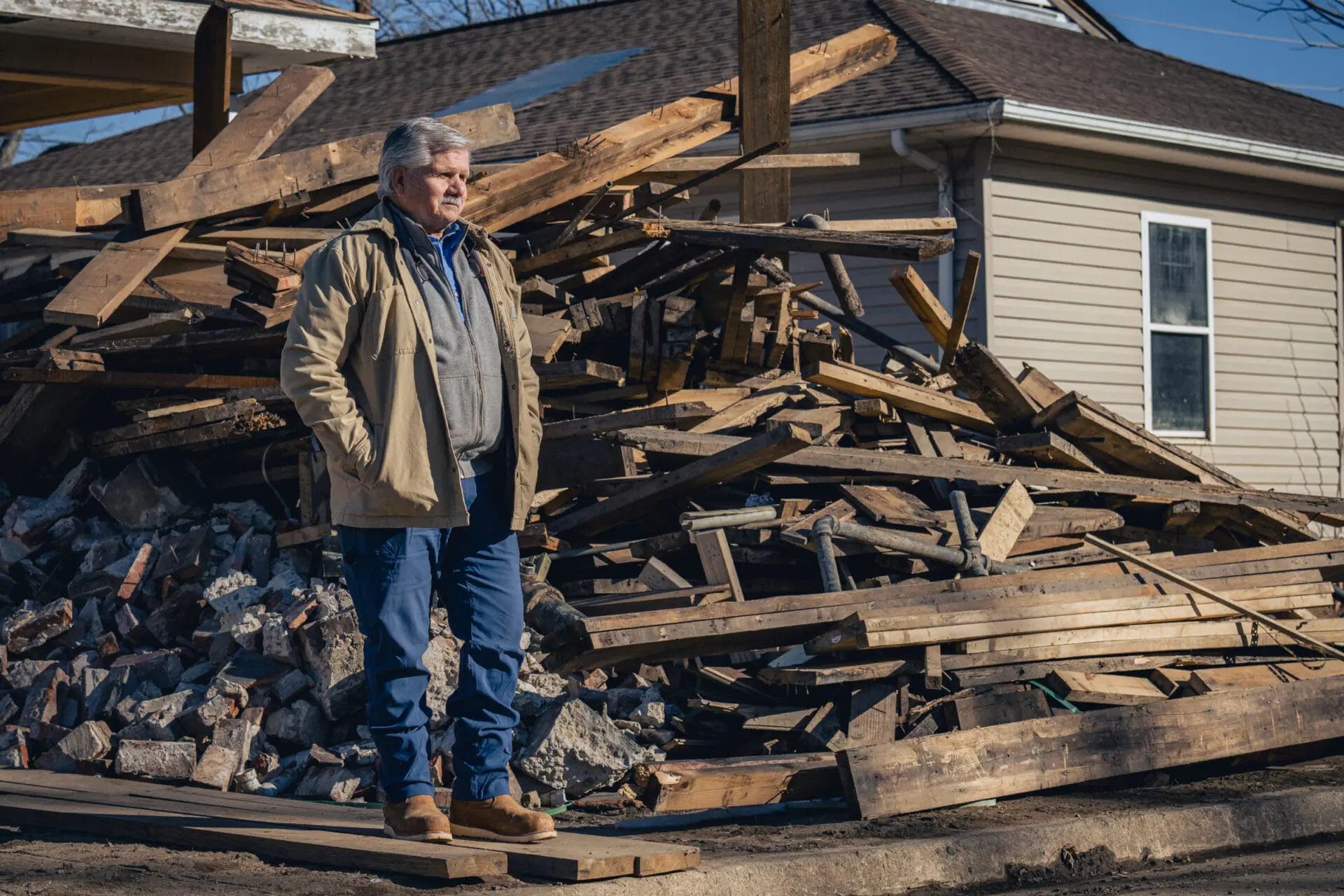
These are all complicated renovations that span multiple episodes of television, but the TOH brand has also covered natural disasters in smaller ways.
Most of my time with the organization was spent as a producer on Ask This Old House, which is the more instructional show which showcases small home projects of a DIY nature: changing out a plumbing fixture, repairing a damaged floor, or transplanting a shrub.
When I first started on Ask This Old House in 2005, the projects were almost entirely devoid of any larger context. After all, unclogging a toilet doesn’t really relate to global warming in any big way.
But as time went on, and as This Old House seemed to be increasingly on the front lines of covering disasters, Ask This Old House began to follow suit.
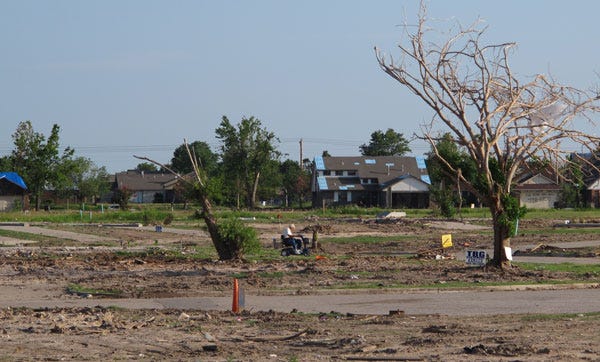
We traveled to Moore, Oklahoma to see the damage wrought by an EF-5 tornado in 2013, the most deadly tornado in the U.S. that year and one that caused billions of dollars in property damage. I was struck with the near laser precision of a tornado. In a dense neighborhood, one street might have homes entirely damaged and ripped from their foundations, while the next street over would have homes with only minor roof damage.
Later, as the Western United States was gripped in a severe drought, we visited Lake Mead outside of Las Vegas to see how severely the water level had dropped. We also partnered with municipal governments in Nevada and Northern California to understand how localities were responding to the need to save water.
We visited hurricane testing labs to better understand how new construction materials could make houses more resistant to damage and interviewed experts on how to slow the spread of wild fires. We forged a partnership with The Weather Channel’s Jim Cantore, who became a frequent guest on our show (and our host on some of that network’s shows), speaking about all kinds of natural disasters.
We even produced an entire episode in the Houston area showing the clean up and demolition process after Hurricane Harvey (an episode that would earn the show its first Daytime Emmy Award).
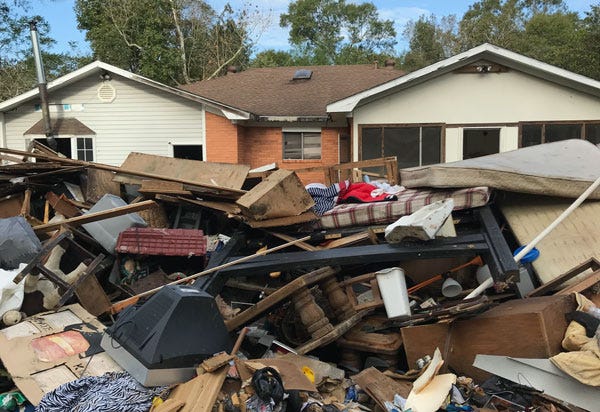
These are just a sampling of some of the segments and episodes of Ask This Old House that I produced. In the time since my departure in 2020, the show has continued to tell stories related to the intersection of housing and severe weather.
Simply by browsing the content of This Old House and Ask This Old House, it’s clear that severe weather events have steadily been gaining more coverage on the shows over the last four decades. This tracks with an observed increase in damaging weather events.
I’m not trying to argue that TOH is deliberately chasing these stories and trying to sensationalize them. Quite the opposite actually. This Old House was a notoriously slow-moving organization when I was there and presumably still is. It was not the place that would generate provocative headlines, preferring to follow the zeitgeist rather than to lead it. After all, it took us two years to arrive in New Orleans after Hurricane Katrina.
Still, I think it’s noteworthy that these two shows with a very narrow point of view on home improvement could not ignore the reality of how climate change is beginning to influence our everyday lives. Even if the show has never directly tied any of the extreme weather events to climate change, looking at the increasing frequency with which these natural disasters show up in the show’s narrative, it’s hard not to see that connection.
Climate change is impacting increasing numbers of us, which is evidenced in the geographic diversity where these stories have taken place: Florida, Louisiana, Texas, New Jersey, California, North Carolina, Oklahoma.
Going back to David Wallace-Wells for a moment, if a majority of our global emissions have happened in my lifetime, it makes sense that these severe weather events and their appearance in popular culture are increasing.
Climate change once seemed like a distant, almost academic threat. Many of us understood it on an intellectual level, even if it felt far removed from our daily life and the consequences felt equally distant. These once in a lifetime storms were just that, once in a lifetime. When Hurricane Andrew hit, it was all anybody could consider. Same with Hurricane Katrina or Superstorm Sandy.
By the the time that I produced the special episode in Houston about Hurricane Harvey in 2017, we had our pick of destructive storms to cover. Hurricane Irma made destructive landfall in Florida a few weeks after Harvey, followed by Hurricane Maria, which devastated Puerto Rico that fall.
It is now becoming clearer that our houses are a part of our fragile ecosystem just like everything else. It’s impossible to tell the story of house construction or home improvement without also talking about how to safeguard against climate disasters or respond when they inevitably strike.
I expect that not only will be continue to see increasingly strong and violent acts of extreme weather, but as those events happen, I imagine This Old House and Ask This Old House will continue to cover them with greater frequency.
Furthermore, climate change will continue to impact our daily lives in big and small ways. That impact will increasingly appear in media of all kinds, whether home improvement shows, cooking shows, comedies, or dramas. Much like the internet or the car, climate change seems poised to become part of the background noise and ambiance of our existence. And for many around the country and around the world, it already is.
Thanks for reading Willoughby Hills! Subscribe for free to receive new posts and support my work.
Related Reading
Some Personal Memories of Roger Cook
If you’ve missed past issues of this newsletter, they are available to read here.