


Welcome to another edition of Willoughby Hills!
This newsletter explores topics like history, culture, work, urbanism, transportation, travel, agriculture, self-sufficiency, and more.
As you’ve probably already heard, Spirit Airlines unexpectedly ceased operations over the weekend, grounding flights, cancelling itineraries, and laying off 17,000 workers. In the matter of a few hours, it went from a completely functional airline carrying thousands of passengers to a defunct name that exists only in memory.
Spirit had been in tough financial shape for some time. They have lost billions of dollars in recent years, attempted a merger with JetBlue in 2023 that was blocked by federal regulators, and then declared bankruptcy twice since 2024. Still, some analysts believed the airline could have emerged from its recent bankruptcy were it not for the surge in oil after the U.S. and Israel invaded Iran.
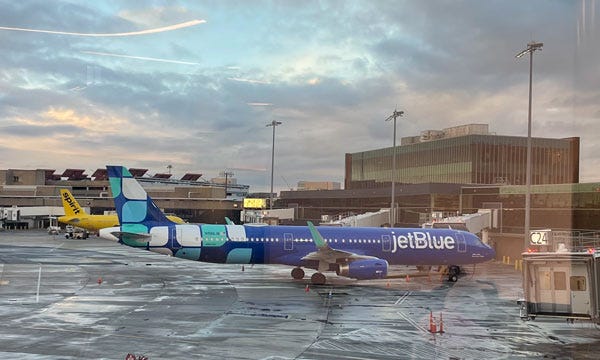
Jet fuel prices are up more than 70% since February, which analysts say would have cost Spirit an additional $360 million by the end of the year. In the end, the combined weight of existing financial pressures with an unexpected climb in jet fuel seems to be what led to Spirit’s essentially overnight demise.
A lot of people want to joke about the end of Spirit or to celebrate its undoing, largely because of its reputation for low cost fares, a la carte pricing, and the occasional brawl or two.
But here’s the thing. We are all Spirit Airlines in this economy right now. The same forces that caused a major U.S. carrier to collapse slowly then all at once are coming for all of us.
The most obvious place is in the cost of fuel. While the rise in gasoline isn’t as dramatic as jet fuel, the average price of a gallon of gas has jumped 39% since February.
This higher fuel cost hits us in two ways. There’s the direct price that we pay at the gas pump to fill our cars. As I’ve written about before, cars have become a necessity because we’ve spent the last 60-70 years building places that are only accessible by car.
I am in the fortunate position for the moment to not feel the immediate impacts of higher gas prices. I do not need to choose between filling my tank or filling my kids’ bellies for example, although that day may come soon.
But for lower wage workers, I wonder at what point it makes sense to stop commuting and showing up for work because so much of their wage is simply going towards commuting costs.
When I was in college, I worked for a few months managing the front end of a Target store. It was a brand new store that had opened in a rougher, more industrial area around Boston where the income levels were relatively low.
I once had an employee tell me she couldn’t come in for her shift because she couldn’t afford the bus fare to get to work. I remember at the time, as a privileged middle class male, not understanding that reality. I tried to reason with her- the bus fare was less than $2.00. Even at Target’s relatively low wages, she would still make that back in about 20 minutes on the clock. In a six or eight hour shift, she would have more than paid for her bus fare. But of course, those earned wages were deferred until pay day, and if she didn’t have the $2.00 for the bus to begin with, there was no hope of being able to earn more.
I think about that story a lot these days, especially as companies continue to push return to office mandates in a time of higher commuting costs. Who are the people most affected by these gas prices? When will that cost be too much for even white collar workers to bear? How will companies respond? What will that do to our economy if large swaths of people simply can’t show up?
The rising fuel costs also impact us in indirect ways.
Nearly every item we need in our lives, from food to clothing, requires fuel to get from the point of manufacture to the point of sale. So increased fuel prices also mean higher prices for literally everything that we buy. Not to mention that we now import significant portions of our consumer goods and increasing amounts of our food. 65% of our fruits and 30% of our vegetables now come from overseas, even if they are varieties that can be grown just fine in our local communities.
This is not sustainable, especially at a time of inflation and wage stagnation.
A survey last year revealed that 73% of respondents are unable to afford anything beyond basic living expenses. Home foreclosures were already up 32% year over year earlier this winter. Both of these were before the U.S. and Israel invaded Iran and oil prices surged. The data that’s coming will be troubling.
If a major airline can literally board up its doors overnight and suddenly cease to exist in a matter of hours, what makes us think the same isn’t the case for any of us? Our homes could be foreclosed upon at any moment. Our jobs could be disrupted by AI, layoffs, mergers, or downsizing. Our grocery bill suddenly so high that feeding ourselves becomes impossible.
Spirit’s yellow planes are the canary in the coal mine. I feel like we’re headed for some rough, rough days ahead. Please keep your seatbelts securely fastened and help your neighbors with their oxygen masks.
Thanks for reading Willoughby Hills! Subscribe for free to receive new posts and support my work.
Related Reading
We Aren’t Ready for Car-pocalypse
Fix SNAP, But Also Fix Food Too
If you’ve missed past issues of this newsletter, they are available to read here.