



I’ve been taking a break from the podcast for a while, but felt like it was important to bring this conversation to the top of your podcast feeds.
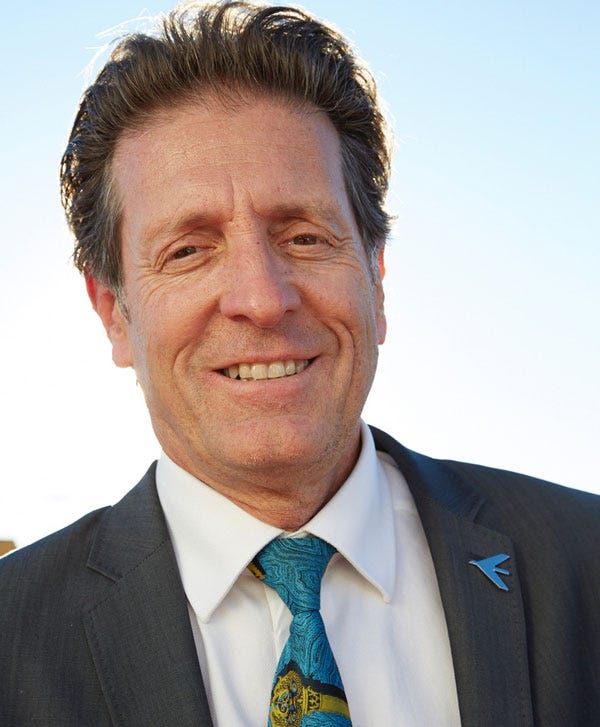
Eddie Sotto was the fourth guest ever on this podcast, joining me for a conversation in May, 2020. He was a designer who spent much of his career at Disney, the design of the Main Street U.S.A. at Disneyland Paris probably being his most notable project. After leaving Disney, Eddie founded his own design studio that brought the principles of immersive and themed designs to restaurants, retail, aerospace, and many other settings.
Sadly, Eddie passed away last week at the age of 67.
When my podcast launched, it was known as Quarantine Creatives and it came at a time when the entire world was closed down because of COVID. I was an out of work TV producer exploring how shifts in my industry like remote production were changing our world.
Eddie was the first guest on the podcast that I didn’t have any connection to prior to interviewing him. I had followed his work on Twitter for some time and was intrigued when he started posting some of his ideas for how public spaces might adapt to COVID early on in the pandemic.
Even though themed entertainment felt a bit outside of where I imagined my podcast headed, I thought Eddie might be the person to help bridge the worlds of physical and filmed entertainment. On a whim, I looked up his design firm’s website and sent an email to the contact address listed. I wasn’t sure who would be on the receiving end of that message and whether or not it would fall on sympathetic ears.
The first episode of my show had debuted the day before I pitched Eddie. I had no track record as a podcaster, no library for him to review, nothing but an idea.
To my surprise, maybe 15 or 20 minutes after sending my email, my phone rang with a 310 number calling. Los Angeles. It was Eddie himself.
He and I talked for maybe a half hour that first day. He wanted to get a feel for me, the types of questions that I might ask, and whether or not this interview would be worth his time. A part of me was frustrated that he was spending 30 minutes vetting me when recording an interview would only take 45. I could also tell that he was a brilliant thinker. He taught me a lot in that first conversation about promotion, marketing, and how to sell an idea.
In the end, he agreed that I was worth his time and we called each other again a few days later, this time with a recorder running.
The conversation primarily focused on his ideas about how public events could be made safer during the pandemic and how design could be integrated in a holistic way that mitigated risk but didn’t feel intrusive. In hindsight, I wish I had asked more about his design career, but his expertise felt like it was best used to talk about what was current instead of what was in the past.
At some point, he had told me that he saw my podcast and its subject matter as an important part of how he could position himself as an “expert witness” for other news programs. I think he imagined becoming a recurring panelist on CNN or something like that.
A few weeks after my interview with him, he was invited to appear on a segment for Fox Business talking about many of the same topics. We exchanged some emails about how he seemed to getting booked for more thought leader appearances around COVID. I joked with him that Fox had the Disney stock ticker on screen, and during the course of Eddie’s interview the stock went from red (losing value) to green (gaining value), even if only by a small amount.
Eddie’s reply:
“Optimism is my main export.”
That was Eddie.
We traded a few more messages over the years. I sent him an interview that I did with his former colleague and friend Tom K. Morris. His response to me: “…really enjoyed the interview with Tom Morris. I’ve known that guy for more than 30 years and I still learned a lot!”
Eddie was generous with me as a beginning podcaster with no track record. He continued to be a booster in our few encounters after the interview. He would always offer a follow up conversation on the podcast or to be available for my newsletter if I was interested. I always was interested, but the timing was never quite right.
Of course now I wish I had followed up and done another one.
According to a remembrance printed in the Los Angeles Times:
“Sotto… spent his final few days at Orange’s UCI Medical Center, but was given a room with a view of Disneyland’s fireworks, which he looked forward to watching each evening.”
Eddie, and the Imagineers he worked with, brought so many memories to families around the world. If there was a more fitting end for a life and a career than watching the fireworks over a place he helped shape, I don’t know what it is.
Eddie leaves behind his wife Deena, his son Brian, daughter Venice and her husband Rocky.
I hope you’ll take a listen to Eddie in better days. Eddie was the type of person who tried to solve problems holistically and answer the questions customers weren’t even asking yet. These are important lessons for any field.
Our conversation was originally released on May 25, 2020 and is being shared with you again in remembrance.
Thank you, Eddie. Rest in peace.
Related Episodes:
25. Disney Historian and Former Imagineer Tom K. Morris (Quarantine Creatives)
56. Legendary Animator and Director Glen Keane (Quarantine Creatives)
69. Legendary Disney Producer/Director Don Hahn (Quarantine Creatives)
Listening Tip:
You can stream this episode on the go using the Substack app.

You can also click “Listen On” in the player at the top of this post to load this episode on your favorite podcast app, or search “Willoughby Hills” in your favorite podcast app too.


