

Redefining Success
It's about humanity, not financial gain
Welcome to another edition of Willoughby Hills!
This newsletter explores topics like history, culture, work, urbanism, transportation, travel, agriculture, self-sufficiency, and more.
I was recently invited to be a guest on The World of Kimberton Waldorf podcast, produced by the Kimberton Waldorf School in Pennsylvania and hosted by Head of School Brad Kershner. (As it turns out, a fellow Northeast Ohioan)
As I’ve written about before in the newsletter and discussed on the podcast, I have been a “Waldorf curious” person for many years. My wife is a Waldorf graduate and my children have been in several different Waldorf environments over their schooling, including a stretch where I served as my daughter’s home school teacher using a Waldorf curriculum.
For those unfamiliar, Waldorf education started in Germany and grew out of the work of philosopher Rudolf Steiner, who also developed an early precursor to organic farming called biodynamic agriculture, made strides in holistic medicine, created a movement based therapy, and built programs for adults with disabilities.
Waldorf education is really about meeting the child’s whole person: head, heart, and hands. Students learn everything from agricultural arts to knitting to woodworking as part of the curriculum, while also developing the ability to think critically and understand history, math, and science. There’s a focus on natural materials, personal connection, and a de-emphasis on technology and screens.
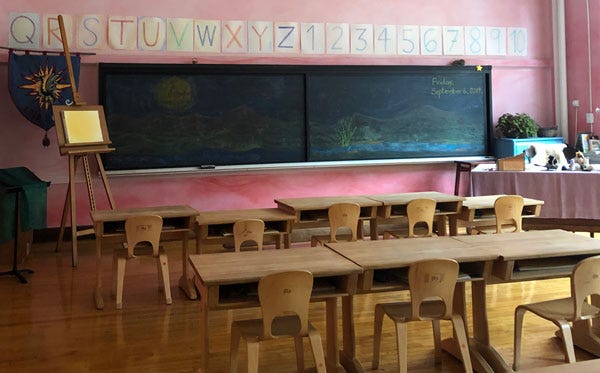
In my journey as a Waldorf parent, including chaperoning many overnight camping field trips, I have learned a lot about myself, my children, and what the next generation truly needs to be set up for success in the modern world.
But perhaps I should put “success” in quotation marks, because I don’t believe that we all have the same definition of success. And that’s really the heart of the conversation with Dr. Kershner.
In American culture, we tend to equate success with monetary wealth. Success is attending Yale or Harvard. Success is becoming a doctor or a lawyer. Success is the big house in the suburbs, the nice car, fancy dinners, and luxurious vacations.
I make the argument that success really has nothing to do with money, career, or status.
True success is being able to do what you love the most in the world. It’s being able to contribute positively to humankind, not just to your own portfolio.
Perhaps most importantly, success means living in a place of self-sufficiency, where somebody can provide for their own needs. They can make their own clothing. They can grow and cook their own food. They can work with wood, metal, and clay. In other words, they can be humans in ways that capitalism has tried to erase in all of us.
And when one can provide for themself and their families, their economic needs are lower. They don’t need the high paying job to pay off enormous debt or to pay others to do things for them. Which means they can do what they love.
If you have a few minutes, I hope you’ll take the time to listen to the entire conversation. You can find it on Apple Podcasts or Spotify.

Thanks for reading Willoughby Hills! Subscribe for free to receive new posts and support my work.
Related Reading
If you’ve missed past issues of this newsletter, they are available to read here.